About
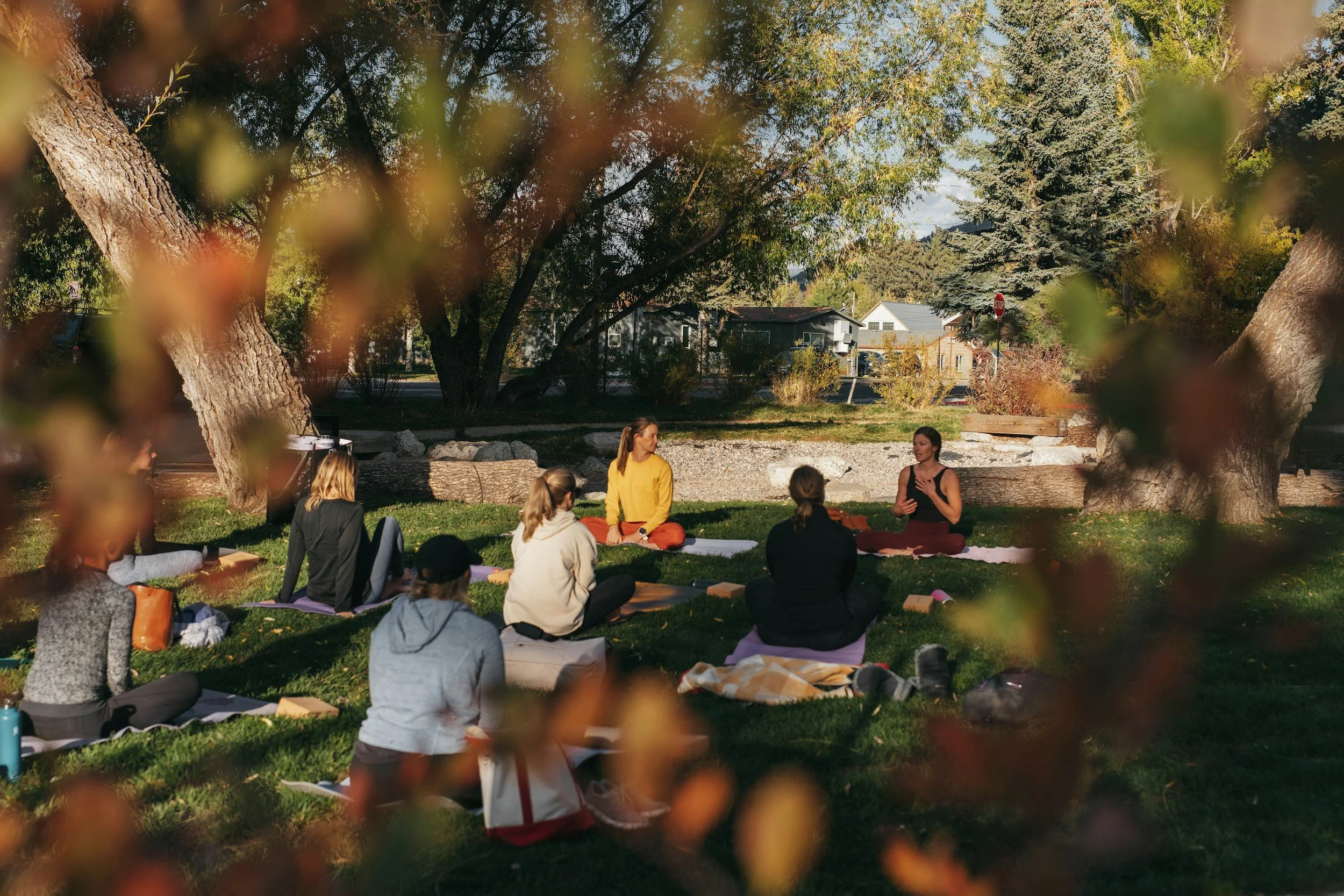
Self-Care Social Hour is part social club, part psychology lab, and part excuse to finally leave your house. Or stay home and get nerdy on self-care in your own way.
We create a variety of experiences that embrace different interests and comfort levels. Introverts and extroverts (and everyone in-between) welcome
We aim to make self-care more meaningful, manageable, and accessible
We use the definition of self-care as “the practice of individuals looking after their health using the knowledge and information available to them.”
We believe self-care encompasses the simple/feel-good as well as the challenging/complex and covers many domains (physical, social, emotional, mental, spiritual, etc.).
The Approach
-
We believe in creating experiences that are social, skeptical, and playful because:
Social — life is busy and we all get stuck in ruts. Even as introverts we realize that being in connection with other people can inspire us to see and feel differently. We work to create different social experiences to meet different needs. Too often self-care is sold to us as something solo. Let’s change that.
Skeptical — let’s talk about the challenges of caring for ourselves! There are plenty and we’re sick of pretending it’s easy. There’s something freeing in being real about this and something hopeful too when you have a healthy skepticism. (Also there’s plenty of “wellness” practices that we need to be wary of …)
Playful — it’s just more fun! It helps us destress and we’ve found that playfulness is a mindset that allows us to be more open, curious, and healthy.
-
We take a relational approach to self-care in both practice and theory.
Practice:
We create spaces of connection and community.
We design interactive events where social needs can be met.
We offer a social environment that provides support, structure, and safety.
We celebrate story and the power of our voice.
Theory:
The social environments of our childhood and present day deeply affect our self-knowledge, skills, and ability to connect to others and our selves.
-
Self-care isn't just a list of tactics or quick strategies. To build care that actually lasts, we look at the deeper foundation:
1.) Personal Context — how your past and present lived experiences impact your ability to care for yourself.
2.) Mindset — how your beliefs, attitudes, and expectations influence your self-care
3.) Skills — your ability to recognize and meet your needs independently and in community.
4.) Social Support — the quality of your social interactions that help or hinder your ability to have quality care for yourself.
-
We believe conversation is one of the most powerful tools of personal transformation. It is through the conversations we have with each other and with our own selves we are able to process, make meaning, and uncover insight.
The Nitty Gritty
Values & Philosophy
Self-Care is Complex
Self-care is personal and ever-changing.
Self-care is holistic — meaning all the different domains of our health impact each other and we see the whole of our health as one interconnected puzzle.
Self-care is relational. Our relationships throughout our life significantly influence the quality of our care.
Self-care is rooted in our context — the collection of experiences, environments, relationships, and systems that influence our thoughts, emotions, and behavior.
Self-care is impacted by our mindset, skills, and social support.
Self-care is varied and not always obvious. It encompasses the easy feel-good and the complex. At times it can be avoidance disguised as healing
Self-Care is Limited
Self-care (in real life) faces many internal and external barriers that limit or prevent practicing care for ourselves.
Self-care doesn’t exist in a vacuum and it often individualizes systemic problems.
Self-care doesn’t fix everything. It helps us navigate difficult and oppressive systems, but it doesn't replace changing them.
Self-care is often sold as a product — something to hustle for to feel worthy/pretty/ acceptable. We call BS.
Self-care can be presented as a way to moralize wellness and become another form of productivity. This presentation is counterproductive to actual care because it makes people feel they’re “failing” at some commercialized concept of self-care.
Self-care is often treated as self-improvement and a chance to “fix ourselves” instead of supporting the person we already are.
Self-Care is Transformative
Self-care can be life-changing in a way that is integrated and natural — without feeling like a perpetual task.
Self-care is practice meeting belief and gives us deeply rich perspective. It allows us to interrogate the protective mechanisms that may actually be hurting us.
Self-care can help us deal with stress differently, have a different relationship with ourselves, and feel better on the daily. Mental health improves as do our relationships and quality of life.
Self-care builds agency and capacity within us — even if we don’t have access to healthy relationships or community.
Self-care helps develop greater strength, joy, competency, and freedom in our lives and in ourselves.
Self-care creates space for conversation with others and with our own selves to process and make meaning of our lives
The Backstory
Once upon a time our founder, Kelsey, rolled her eyes at self-care. Sure, at times it sort of made sense, but she didn’t have the time, energy, or the pretty zen-like vibe “self-care people” always seemed to have. Instead she ran a little sarcastic and skeptical. Besides, too often self-care felt like a condescending band-aid
But then life had other plans (a big move, new baby, new career, sick dad) and Kelsey realized she had to do something differently because her old methods of avoidance and “pushing through” weren’t working that well anymore. And she made some amazing changes. Woohoo! End of story, right? Nope. Because just as soon as the positive changes had made a difference she “slacked off”.
Kelsey wondered, “Why is self-care so damn hard? And am I the only one who feels this way?”And so she did what any rational person who struggled with self-care and being social would do — she created a project called “Self-Care Social Hour”. She gathered people together to talk through the challenges of taking care of themselves. She quickly discovered she wasn’t alone.
And some magic happened. It was a relief to admit self-care is complicated — it felt freeing. Talking about the challenges and opportunities made things feel less alone and more inspiring. Having dedicated time and space to focus on self-care made it more possible — and more meaningful.
Through her work as a social worker, therapist, and mental health advocate Kelsey has studied the impact of stress, intergenerational trauma, and self-care practices on individual and community well-being. Her biggest teachers have been the hundreds of conversations she’s had with her clients … and with herself.
The concept of self-care has often been co-opted and sold to us in many ways that are unhealthy. And while self-care isn’t the answer to everything, when it’s meaningful and realistic, it becomes a powerful part of the puzzle of our well-being and the well-being of others.

Kelsey Wild, LCSW
Self-Care Skeptic Turned Convert & Founder of Self-Care Social Hour